“Pedestrian accident attorney near me” is often the first thing people search after they get hit in a crosswalk, parking lot, or neighborhood street. You are in pain, your phone is buzzing with insurance calls, and you are trying to figure out what to do first, and what not to do.
If you are looking for practical guidance on pedestrian accidents and want to understand your options, start here. This guide focuses on Oregon-specific steps, timelines, and the evidence that tends to matter most.
Also Read
- Pedestrian Accidents FAQs
- Common Mistakes After a Car Accident
- Top Car Crash Lawyers
- Do I need to get a lawyer for a wreck that was my fault?
- Driving without auto insurance
TL;DR
- Get medical care right away, even if symptoms seem minor.
- Call law enforcement and get a report.
- Document the scene fast (photos, video, witnesses).
- Report the crash to Oregon DMV within required timelines when applicable (often within 72 hours).
- Do not guess about fault or sign anything you do not understand.
- If injuries are serious or fault is disputed, a pedestrian accident attorney Oregon clients trust can protect your claim and handle insurers.
Key Takeaways
- Time matters. Evidence disappears quickly, especially video.
- Oregon reporting rules can be strict. Many crashes must be reported to DMV within 72 hours.
- Crosswalk rules are broader than many people realize. In Oregon, every intersection can function as a crosswalk, and drivers must stop for people showing intent to cross in marked or unmarked crosswalks.
- Your medical records drive the value of the claim. If it is not documented, insurers tend to discount it.
The earlier you get clarity on fault and coverage, the stronger your position. A pedestrian accident attorney Oregon residents rely on can help when liability, insurance, or injuries get complicated.
First priorities after a pedestrian crash
In the first hour after a pedestrian collision, your job is not to “build a case.” Your job is to protect your health and create a clean record of what happened.
Get medical care
Even if you can walk away, get checked. Pedestrian impacts can cause concussions, internal injuries, and soft-tissue trauma that shows up later. A prompt evaluation also links your injuries to the crash, which matters for insurance.
Call police and request a report
A police report can reduce the “your word vs. theirs” problem later. If the driver claims you “came out of nowhere,” the report, witness statements, and scene notes may be crucial.
Take photos and video
If you can safely do it (or ask someone to help), document:
- The crosswalk or intersection markings
- The signal phase (walk sign, countdown timer, light timing if visible)
- Vehicle position, damage, and license plate
- Road conditions (rain, darkness, glare, construction)
- Your visible injuries (even small bruises can develop)
Identify witnesses and nearby cameras
Get names and phone numbers. Also look for:
- Business entrances with cameras
- Apartment buildings
- Transit cameras
- Dashcams from stopped cars
Video often gets overwritten quickly. If you suspect footage exists, act fast.
Oregon crash reporting: the 72-hour issue
Many people do not realize Oregon has a separate DMV reporting requirement in addition to a police report. Oregon DMV explains that drivers involved in qualifying crashes must submit an Oregon Traffic Collision and Insurance Report to DMV, typically within 72 hours, and you may still need to file even if law enforcement made a report.
Pedestrian crashes frequently qualify because there is injury, and sometimes because damage thresholds are met. If you are unsure, it is safer to review the DMV guidance and file when required.
Why it matters: DMV warns that failing to file when required can lead to suspension notices.
Understanding crosswalk duties in Oregon
Pedestrian claims often turn on a simple question: Who had the right of way?
Oregon publishes a crosswalk safety handout that highlights two points many drivers and pedestrians miss:
- Every intersection is a legal crosswalk.
- Drivers must safely stop for people showing intent to cross at marked or unmarked crosswalks (including marked mid-block crosswalks).
Oregon’s rules of the road also include pedestrian-related provisions in Chapter 811, including ORS 811.028 (failure to stop and remain stopped for a pedestrian).
Practical takeaway: Even when a driver says “there wasn’t a crosswalk,” Oregon law may still treat the intersection as one. That can change how fault is evaluated.
What compensation can include in a pedestrian injury claim
A pedestrian collision claim is usually about more than ER bills.
Common categories include:
- Medical expenses (ER, imaging, surgery, PT, medications)
- Future medical care (follow-ups, rehab, mobility aids)
- Lost income and reduced ability to work
- Out-of-pocket costs (transportation, household help)
- Pain, limitations, and disruption to daily life
Your documentation matters. Keep:
- A symptom journal (sleep, headaches, walking tolerance, anxiety)
- Appointment and mileage logs
- Receipts for braces, crutches, OTC meds, rides to treatment
If you have questions about coverage that may help early on, this Ryan Hilts Law resource on Personal Injury Protection (PIP) is a useful background.
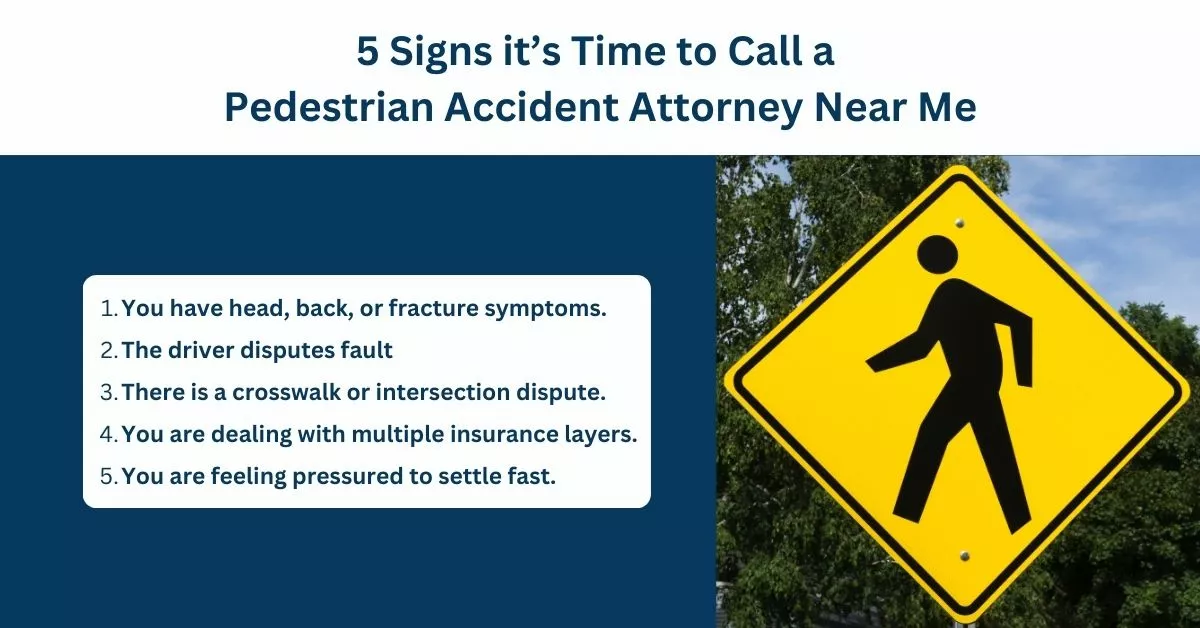
5 signs it’s time to call a pedestrian accident attorney near me
Some claims are straightforward. Many are not. If any of these are true, it is usually smart to get legal advice early.
- You have head, back, or fracture symptoms.
These injuries can change over time and may require long-term care. - The driver disputes fault or claims you “darted out.”
When fault is contested, evidence and witness statements become central. - There is a crosswalk or intersection dispute.
Oregon crosswalk rules can be broader than people expect. - You are dealing with multiple insurance layers.
For example: rideshare drivers, employer vehicles, or out-of-state policies can complicate coverage. - You are feeling pressured to settle fast.
Quick offers are often aimed at closing the file before the full injury picture is clear.
If you are seeing these red flags, a pedestrian accident attorney Oregon residents trust can step in, gather evidence, and take over insurer communications.
Deadlines: do not wait until the last minute
Oregon has a two-year statute of limitations for many personal injury claims. ORS 12.110 states that actions for injuries to the person generally must be commenced within two years.
That does not mean you should wait two years. Evidence is often strongest in the first days and weeks.
Conclusion
If you were hit while walking, your next steps can shape your health and your financial recovery. Focus on medical care, reporting, and documentation. Then evaluate whether you need help dealing with fault disputes, evidence collection, and insurance pressure.
If you’re searching for a pedestrian accident attorney near me, it helps to work with someone who understands how Oregon pedestrian claims actually unfold, from preserving evidence early to handling insurance pressure. Ryan Hilts approach is rooted in practical guidance and straightforward communication, and when you’re ready to talk through what happened and get clear next steps, contact us today for a free case review.

Frequently Asked Questions
- Do I have to report a pedestrian crash to Oregon DMV?
Often, yes, if the crash meets DMV reporting criteria (commonly when there is injury). Oregon DMV states qualifying collisions generally must be reported within 72 hours and you may still need to file even if police responded. - What if the driver says there was no crosswalk?
Oregon’s guidance explains that every intersection is a legal crosswalk, and drivers must stop for people showing intent to cross at marked or unmarked crosswalks. - How long do I have to file a pedestrian injury lawsuit in Oregon?
For many personal injury claims, ORS 12.110 provides a two-year limitations period. - What should I avoid saying to insurance adjusters?
Avoid guessing about speed, timing, or fault. Avoid minimizing injuries (“I’m fine”) early on. Keep it factual and consider getting advice before recorded statements or signing releases. - Can I still recover compensation if I was partially at fault?
Possibly. Fault rules can be complicated and fact-specific, especially in pedestrian cases. A pedestrian accident attorney Oregon victims consult can evaluate comparative fault, evidence, and coverage options based on the details.