
Car accident attorneys in Bend, Oregon can make a major difference in what happens after a crash, especially in the first few days, when evidence is fresh and insurance companies are already building their version of the story.
If you were hurt in Central Oregon, this article explains how personal injury and car accident claims work locally, and what to expect as your case moves forward.
“After a collision, your top priorities are safety, medical care, and preserving evidence. The sooner you protect the record of what happened, the better positioned you are to seek full compensation.” – Ryan Hilts
Read More:
- Avoid These 10 Common Mistakes After a Car Accident
- Oregon Uninsured Motorist Law
- Oregon Underinsured Motorist Coverage
- Personal Injury Protection Oregon (PIP)
TL;DR
If you’re in a crash in Bend, focus on safety and medical care, document the scene, and be careful with insurance statements. Oregon also requires many drivers to file a DMV crash report within 72 hours depending on injury/damage thresholds. If you were injured, you may also be facing strict legal deadlines and fault rules, so it’s smart to talk with a lawyer early, before evidence disappears or the insurer pressures you into a quick settlement.
5 Key Takeaways
- Get medical care early: some injuries (like whiplash) can appear or worsen over time.
- Document everything: photos, witness names, road conditions, and symptoms.
- Oregon DMV reporting can be required within 72 hours for many crashes.
- Oregon uses modified comparative negligence: fault can reduce (or eliminate) recovery.
- Time limits apply: waiting too long can cost you the right to recover.
What should I do right after a crash in Bend?
The moments after a collision are stressful, especially if it’s on a busy route like US-97, near roundabouts, or in winter driving conditions. Here’s a practical, claim-friendly checklist.
Step-by-step: the “do this now” checklist
- Call 911 and get to a safe spot (if you can).
Your safety comes first. If vehicles can be moved out of traffic safely, do so and wait for help. - Get medical evaluation, even if you “feel okay.”
Some crash injuries (including whiplash) may not be obvious immediately. - Exchange the right information, don’t negotiate blame.
- Get: names, contact info, insurance, plate numbers
- Avoid: apologizing or guessing about fault (insurers may use this later)
- Photograph the scene like you’re building a timeline.
- Vehicle positions, damage, skid marks
- Weather/visibility (snow, ice, glare), signage, lane markings
- Close-ups + wide shots
- Collect witness names and contact info.
Neutral witnesses can matter if the story changes later. - File an Oregon DMV crash report if required.
Oregon’s DMV collision reporting rules can require a report within 72 hours in many situations (including injury and certain damage thresholds).
If you need the form, Oregon provides the official Traffic Collision and Insurance Report. - Be careful with insurance calls.
You can report the basics promptly, but avoid recorded statements or detailed opinions before you understand your injuries and facts. - Talk with a lawyer early if you’re injured or the crash is complicated.
A Bend-focused attorney can help protect evidence, handle insurer pressure, and set your claim up correctly.
In Bend crashes, the best claim outcomes usually start with early documentation, medical care, and smart communication.
 When should I call a car accident attorney in Bend, Oregon?
Not every minor fender-bender needs a lawyer. But many injury claims do, because the financial stakes are high and the insurer’s incentives don’t match yours.
Consider calling quickly if any of these are true:
- You went to urgent care/ER or have ongoing symptoms
- The other driver disputes fault or gives a different story
- There were pedestrians/cyclists or multiple cars involved
- You missed work or can’t do normal activities
- The insurer pushes a fast settlement before you finish treatment
- You suspect serious damages (future medical care, lasting pain, disability)
If you’re injured or the insurer is already pushing you, an early consult can prevent expensive mistakes.
Oregon deadlines that can make or break your case
Deadlines are where people lose otherwise strong claims.
1) DMV crash reporting (often 72 hours)
Oregon DMV rules may require filing a crash report within 72 hours in many collisions (including injury and certain damage thresholds).
2) Lawsuit filing deadlines (statutes of limitation)
Oregon’s limitations statutes can be complex and fact-specific, but time limits matter: waiting too long can cut off your ability to recover in court.
A strong claim can still fail if you miss a reporting or filing deadline.
How fault and compensation work in Oregon
Oregon is not a “free money” state after a crash. Your recovery depends on proof, damages, and fault.
Oregon’s comparative negligence rule in plain English
Oregon follows a modified comparative negligence standard. If you are not more at fault than the combined fault of others, you can still recover, but your damages may be reduced by your percentage of fault.
Example (simple):
- Total damages: $100,000
- Your fault: 20%
- Potential recovery: $80,000 (damages reduced by 20%)
What compensation can include (depends on your case)
- Medical bills (current + future)
- Lost wages / reduced earning capacity
- Pain and suffering (how the injury impacts daily life)
- Property damage and out-of-pocket costs
Fault arguments are a major battleground, so documentation and consistent medical records help.
Common car accident injuries that show up later
People often assume: “If I didn’t break a bone, I’m fine.” But many crash injuries are soft-tissue or neurological and take time to fully appear.
Injuries that may be delayed
- Whiplash / neck strain (often from rear-end impacts)
- Back pain and muscle/tendon injuries
- Concussion symptoms (headache, light sensitivity, fogginess)
- Numbness/tingling (possible nerve involvement)
Why early medical documentation matters
- It protects your health (you get treated sooner)
- It creates a clearer timeline linking symptoms to the crash
- It reduces insurer arguments that “you weren’t really hurt”
If symptoms evolve over days, that’s common. Don’t ignore it, and document it.
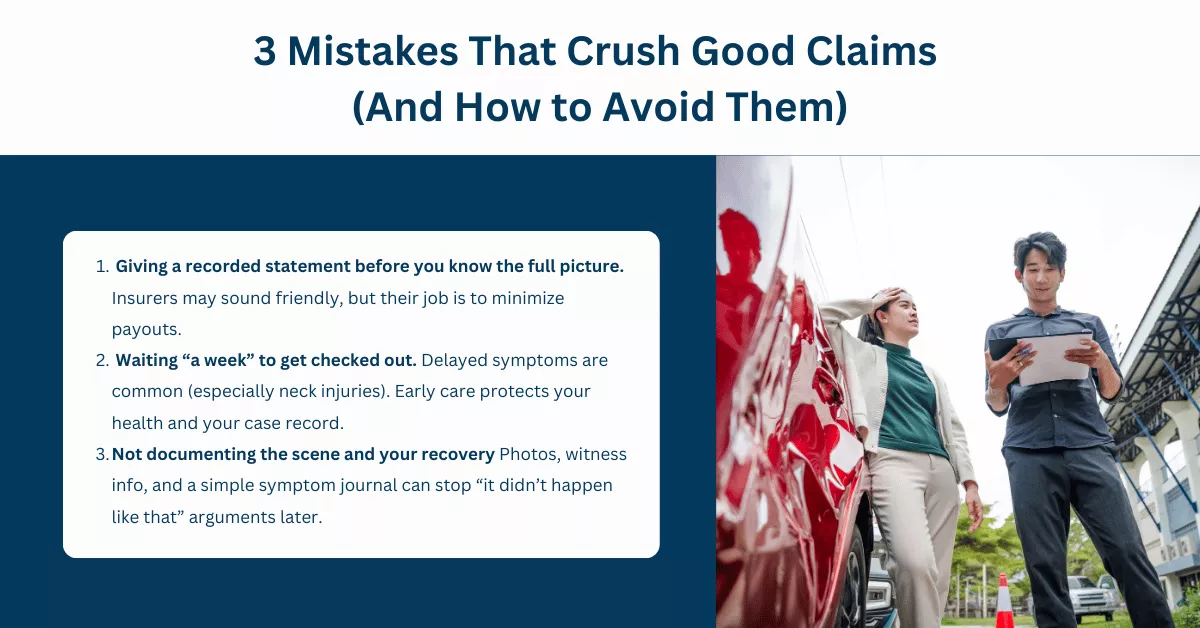 3 mistakes that crush good claims (and how to avoid them)
Mistake #1: Giving a recorded statement before you know the full picture
Insurers may sound friendly, but their job is to minimize payouts. Share the basics, but be cautious with detailed, recorded narratives.
Mistake #2: Waiting “a week” to get checked out
Delayed symptoms are common (especially neck injuries). Early care protects your health and your case record.
Mistake #3: Not documenting the scene and your recovery
Photos, witness info, and a simple symptom journal can stop “it didn’t happen like that” arguments later.
Most claim problems come from normal human reactions: confusion, delay, and trusting the insurer to “handle it.”
How to choose the right attorney for a Bend crash
“Best” isn’t about billboards. It’s about fit, focus, and follow-through.
Questions worth asking in a consultation
- Will you personally handle my case, or pass it off?
Ryan Hilts emphasizes a limited caseload/personal approach on his site. - How do you deal with insurance adjusters and recorded statements?
- What evidence do you gather early (video, witnesses, medical experts)?
- How do fees work?
The firm offers free consultations and contingency-fee representation (no fee unless there’s a recovery).
Choose someone who is responsive, evidence-focused, and clear about next steps.
Conclusion
A crash can derail your life fast: pain, missed work, and nonstop insurance calls. If you were injured, getting help early can protect your health and your financial recovery.
If you need car accident attorneys in Bend, Oregon who take a hands-on approach, Ryan Hilts Law can help you understand your options and next steps. Contact Ryan today for a free consultation.
 FAQ
FAQ
Do I have to file a crash report in Oregon?
In many crashes, yes. Oregon DMV rules can require you to submit a crash report within 72 hours if the collision meets certain thresholds (for example, injury or a required level of property damage).
What if I’m partly at fault for the crash?
Oregon follows a modified comparative negligence rule. That generally means your compensation can be reduced by your percentage of fault, and if your share of fault is too high under the statute, you may be barred from recovering damages.
How long do I have to file a lawsuit after a car accident in Oregon?
Oregon has statutes of limitation that set deadlines for when certain claims must be filed. The exact deadline can depend on the type of claim and specific facts, so it’s important to confirm which statute applies to your situation.
Why do some injuries show up days after a crash?
Some collision-related injuries, especially soft-tissue injuries, can develop or feel worse after the initial adrenaline wears off. For example, whiplash symptoms may not be immediate.
Should I talk to insurance right away?
You should report the crash promptly, but be careful about giving detailed or recorded statements before you understand the full scope of your injuries and have all the facts. If you’re unsure, consider getting guidance before agreeing to a recorded interview or signing any releases.
About the Author
Ryan Hilts is an Oregon personal injury attorney with offices in Lake Oswego and Bend who represents clients across Oregon and Washington in cases including car accidents, trucking and motorcycle collisions, wrongful death, and other serious injury matters. He’s known for a personalized approach, and a deliberately limited caseload.
