
News
Many people think that a lawsuit is needed in personal injury cases, but there are less drastic steps that should be taken first to attempt to avoid the time and money involved in litigation. A demand letter outlining your injuries and losses is typically the first step in settlement outside of court.

Definition of a Letter of Demand
The initial letter written by one party demanding something from another party is a letter of demand.
A demand letter should include these things
- A statement of the wrong that has been committed
- The action or payment that is demanded
- The method by which the demand might be carried out
- The timeframe the demand should be carried out in before further action is taken
All of these details should be present to make an effective case that will stand up in court later if necessary. Of course, this is a bare-bones outline of what is necessary; it’s the details that determine a letter’s efficacy.

What Should Be in a Letter of Demand?
Demand letters can be drafted by anyone, but they should be written with legal professionals in mind.
An effective demand letter should be clear, concise, and specific. While it might be addressed to the insurance company of a person who has behaved poorly, the letter should ultimately be written with legal professionals in mind. Hopefully, the person who receives the letter will rectify the situation, but if they don’t then the claim will need to move into the legal system.
The demand letter might ultimately be read by a lawyer for the insurance company and used as a starting point in their preparation to defend the case. No matter who the letter is addressed to it should be written so that a third-party with no knowledge of the situation can understand your case and appreciate its merits.

What Should NOT Be in a Letter of Demand?
It’s important to know what a letter of demand should not be.
In order to draft an effective demand letter, it’s not enough to simply know what should be in such a letter; you should also know what to avoid. To begin with, a letter of demand is not the place for personal insults and attacks. The goal of such a letter is to convince the other party to rectify the situation at hand. Insults are more likely to cause the situation to escalate rather than bring it to a conclusion. It is important to keep the letter as professional as possible.

How Important is a Letter of Demand?
The letter of demand can be considered the first step on the road to justice.
In some cases, a letter of demand might be all that is needed to convince a delinquent party to produce what is owed. Legal cases that last for years might hinge upon a letter that was drafted in a matter of minutes. Keep this in mind if you ever have to write such a letter. If a claim is worth making, then it’s worth making correctly, and that means taking the time to draft a quality letter of demand.
Car accidents can be incredibly traumatic experiences. Recovery after an accident can be a long process, and physical healing is just one consideration. Injuries caused by car accidents are covered by a statute of limitations. This means that if you postpone legal action for too long, you may lose your claim.
Car accident statutes of limitations vary depending on the state the accident occurred in and the type of damage caused by the accident. In Oregon, the statute of limitations is two years. There are also 180 day Tort Claim Notice requirements for cases involving public bodies and dram shop claims.
The Oregon Statute of Limitations.
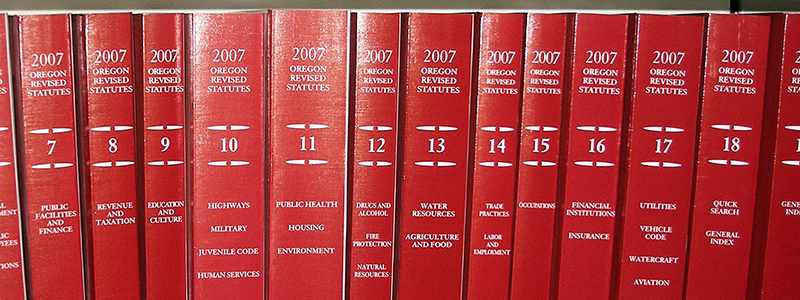
The statute of limitations that covers most car accidents can be found in the Oregon Revised Statutes, Volume 1, chapter 12:
“An action for assault, battery, false imprisonment, or for any injury to the person or rights of another, not arising on contract, and not especially enumerated in this chapter, shall be commenced within two years; provided, that in an action at law based upon fraud or deceit, the limitation shall be deemed to commence only from the discovery of the fraud or deceit.”
\


Dealing with a Running Clock
After any car accident in Oregon, you have two years to either settle the case or file a lawsuit. legal compensation. This is why anyone injured in a car accident needs to move with urgency if they want to seek compensation through the legal system.
It’s always a challenge to deal with the aftermath of a personal injury, and the last thing most people want to handle is the legal situation regarding reimbursement and other payment. Fortunately, the state of Oregon has quite favorable laws in this area, and there’s one particular concept which can really help: pain and suffering.

Definition of Pain and Suffering
Pain and suffering can be broken into two categories:
- Physical – actual pain in your body
- Emotional – psychological ailments which occur in your mind
It’s possible to file an insurance claim for these, but they aren’t the only compensation you may receive.
Oregon Pain and Suffering Law
The law is designed to compensate injury victims for various purposes. In this case, the payments are made in the form of damages, and they are easily explained in the following quote:
Here are some examples of economic damages:
- Charges for medical and rehabilitation procedures necessary because of the injury
- Loss of income due to the injury
- Costs due to the loss of property because of the accident
- Damage to a reputation (which will result in monetary loss)
Here are some examples of non-economic damages:
- Physical and mental pain
- Emotional stress
- Humiliation and reputation damage

Oregon Economic and Noneconomic Damages
Pain and suffering must be proven to be as a result of the accident, but there is no standard way to calculate it.
”The degree of pain and suffering an individual experiences can vary greatly from person to person.”
You will be required to prove that whatever pain and suffering you have was caused by the accident, and you will need to have appropriate documentation and testimony to prove that.
Oregon Limitations on Pain and Suffering
There are multiple aspects of the Oregon laws which place restrictions on pain and suffering damages, so you need to be aware of these as early as possible.
- Time: There is a specific time limit in which you have to file your lawsuit.
- Caps: There are limits to the amount of the damages you can ask for.
- Shared Faults: If it can be argued that you shared some of the fault for the accident that happened, this can be used against you (and it may reduce the amount of the damages accordingly).
- Government: If your claim is against the state government (or an employee), then different rules apply. For example, you only have 180 days to file a Tort Claim Notice – not 2 years.

How To Calculate or Measure a Pain and Suffering Settlement:
Economic damages are easier to calculate than non-economic, but there are methods to determine both types.
To calculate economic damages, you just need to have proof. You can show medical bills, the amount of salary you would have been paid for working those days, and similar information.
Non-economic damages are more complicated.
There are a number of approaches that insurance companies take when calculating pain and suffering as part of an injury settlement.
It’s a good idea to keep any receipts and bills you have because of your injury. Here are some examples of what are commonly used:
- Medical bills
- Prescription documentation and receipts
- Proof of lost wages
- Photos/medical reports about injuries
In general, the more you can provide, the better.
Why Ryan Hilts Is The Right Attorney For You
Insurance companies are experts at fighting these claims, so it pays to have an experienced and understanding lawyer by your side.
The process of filing a claim for pain and suffering in Oregon gets more complicated based on the severity of the injury, but it is never an easy one to do. I’ve helped countless people through this difficult time, and they were able to get back to things that meant the most to them in their lives – with an appropriate amount of compensation.