
Portland Hit and Run Lawyer: What to Do After the Driver Flees
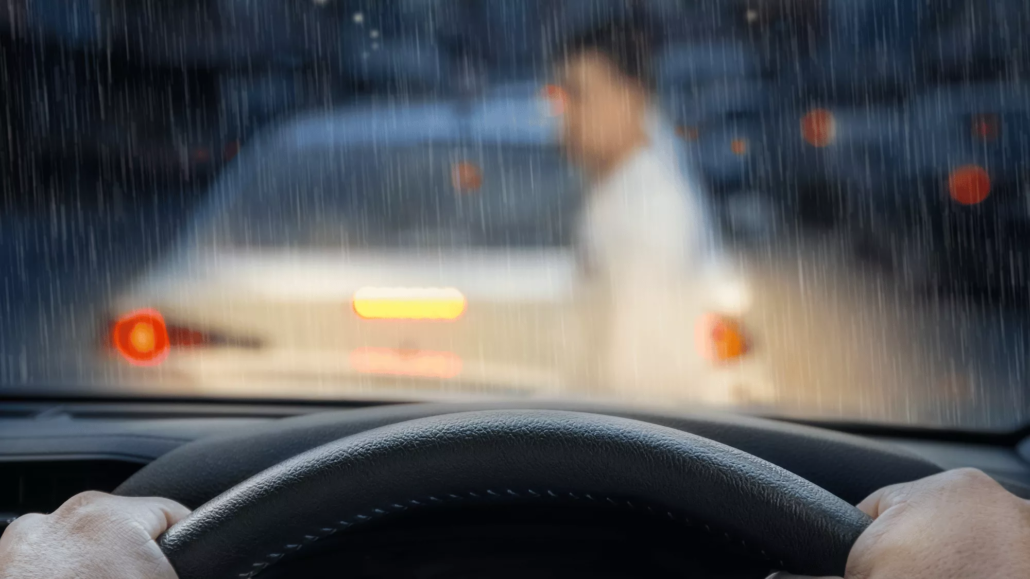
When people search for a Portland hit and run lawyer, the first question is usually the same: ‘What am I supposed to do now that the other driver took off?’ If you’re in that position, pause and focus on the next few steps. The actions you take right after a hit-and-run can make a real difference in your medical care, the police investigation, and the insurance claim that may pay for your recovery.
Many of the same issues that come up in car accident claims also apply here, but hit-and-run cases involve added complications. When the other driver disappears, your own insurance coverage, the evidence you preserve, and how quickly you act often become central to the case.
Also Read:
- What Happens If the Other Driver Is Uninsured in Oregon? Immediate Steps & Legal Options
- Common Mistakes People Make After Accidents — And How to Avoid Them
- Drunk Driving Hit-and-Run Legal Help in Oregon: What You Need to Know
TL;DR
If a driver flees after hitting you in Portland, call 911 if anyone may be hurt, stay at the scene, gather witness names and photos, and write down every detail you remember about the vehicle. In Oregon, many crashes must also be reported to DMV within 72 hours, and Portland Police says hit-and-run crashes are among the collisions it investigates. Your own policy may become the main source of recovery through PIP and uninsured motorist coverage, so report the claim promptly and do not guess, speculate, or rush into a recorded statement.
Key Takeaways
- A hit-and-run is not just frustrating. It is a time-sensitive evidence case.
- Portland Police may investigate hit-and-run crashes, but your own notes, photos, and witnesses still matter.
- Oregon drivers often must file a DMV collision report within 72 hours when the crash meets reporting thresholds.
- Your own insurance may be the path to recovery through PIP and uninsured motorist coverage.
- The earlier a lawyer steps in, the easier it is to preserve camera footage, witness statements, and insurer deadlines.
What should you do immediately after a hit-and-run in Portland?
The first goal is simple: protect yourself before you try to protect the claim.
1. Call 911 if anyone may be injured
Do not talk yourself out of this because the pain feels “manageable.” Adrenaline covers a lot. Head injuries, neck injuries, and internal injuries can look minor at the scene and feel much worse later. If emergency help is needed, get it moving right away.
2. Stay at the scene
Oregon law requires drivers involved in collisions to stop, remain at the scene, and render reasonable aid. Portland Police also notes that hit-and-run collisions are one of the categories it investigates. That matters because leaving too quickly can create confusion about what happened and who observed what.
3. Capture every detail you can remember
In a normal crash, you exchange insurance and registration. In a hit-and-run, you may never get that chance. That makes small details much bigger than they would be in another case.
Write down:
- The vehicle description: Make, model, color, body style, damage, bumper stickers, company markings.
- Any part of the plate: Even two or three characters can help.
- Direction of travel: Which street the driver took and whether they turned.
- What happened seconds before impact: Speeding, swerving, running a light, drifting, braking, or no braking.
- What you heard: Screeching, revving, scraping, or a witness yelling out a plate number.
4. Get witness information before people disappear
Witnesses almost always leave faster than victims think they will. Ask for names and numbers. If someone has dashcam footage, ask them to save it immediately. If a nearby business may have security footage, make a note of the location before you leave.
5. Photograph more than the damage
Take close shots and wide shots. Damage photos matter, but context matters too. Photograph skid marks, debris, broken glass, lane markings, nearby intersections, traffic lights, weather conditions, and anything that helps recreate the crash later.
A hit-and-run claim is often like putting together a puzzle after someone threw half the pieces in the gutter. The more pieces you save early, the stronger the picture becomes.
Why reporting fast matters in a Portland hit-and-run case
A lot of people assume the police report handles everything. It does not.
Oregon DMV says drivers involved in a reportable crash must submit an Oregon Traffic Collision and Insurance Report within 72 hours. That duty can apply when there is injury or death, when damage to your vehicle is over $2,500, when any vehicle has over $2,500 in damage and is towed, or when property damage other than a vehicle exceeds $2,500. Oregon also says you still need to file your own DMV report even if law enforcement files one.
Portland Police adds another important point: collisions where no officer was at the scene generally cannot be investigated later after the scene is cleared and the drivers leave, but that limitation does not apply to hit-and-runs. That does not mean every case gets solved. It does mean you should report quickly and preserve what you have.
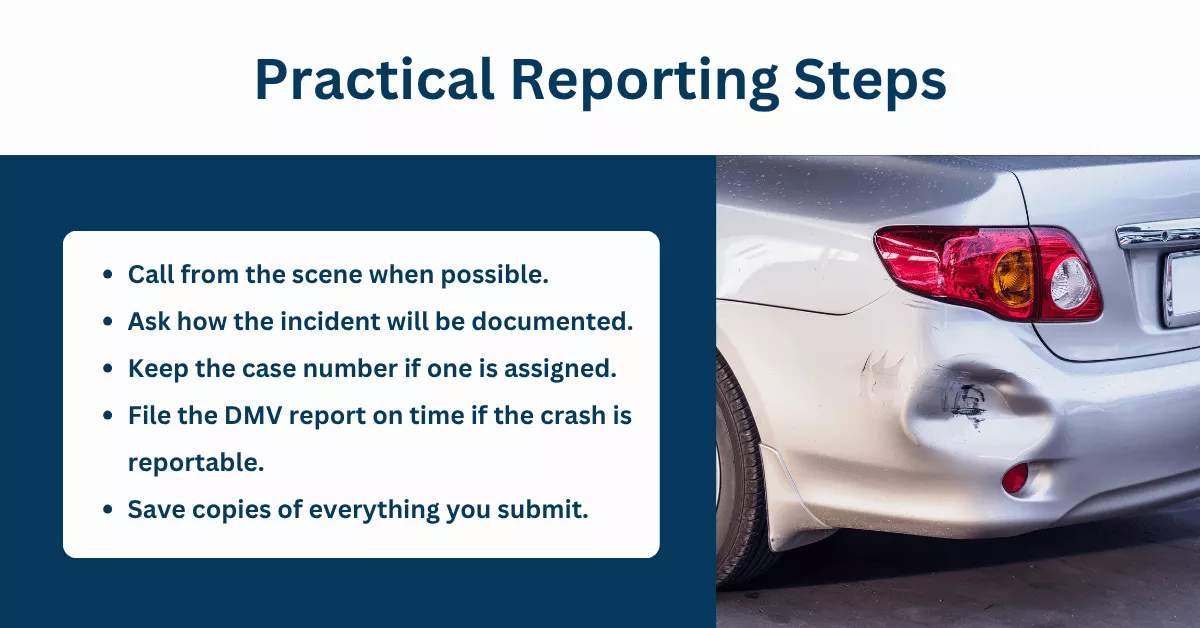 Practical reporting steps
- Call from the scene when possible.
- Ask how the incident will be documented.
- Keep the case number if one is assigned.
- File the DMV report on time if the crash is reportable.
- Save copies of everything you submit.
If an officer filed a Portland police report, Portland Police says involved drivers can request a copy through Records, and if you only received a Traffic Crash Exchange Report, you may need to wait at least 72 hours before asking Records for the case number.
How insurance usually works after the driver flees
When the at-fault driver vanishes, many people assume they are out of luck. In Oregon, that is not always true.
Oregon DMV lists minimum required coverages that include Personal Injury Protection (PIP) of $15,000 per person and uninsured motorist bodily injury coverage of $25,000 per person and $50,000 per crash. PIP is important because it can help with medical expenses regardless of fault, while uninsured motorist coverage can become critical in a hit-and-run bodily injury claim.
Oregon sources also explain that uninsured motorist coverage can apply when an uninsured or hit-and-run driver causes injury. For hit-and-run and phantom-vehicle situations, Oregon law requires prompt reporting, including reporting the crash within 72 hours and, for UM purposes, filing a statement with the insurer within 30 days.
What that means in plain English
Your claim may involve more than one lane of recovery:
- PIP: Early medical bills and certain related losses.
- UM claim: Bodily injury damages when the driver cannot be identified or had no applicable insurance.
- Possible liability claim later: If police identify the fleeing driver.
One mistake people make here
They assume their own insurance company is automatically “on their side.” It is still an insurance company. Even when coverage exists, adjusters may question causation, treatment, preexisting conditions, witness credibility, or whether the hit-and-run vehicle actually caused the injuries you claim.
That is one reason it often makes sense to talk to counsel before giving a detailed recorded statement.
When should you call a Portland hit and run lawyer?
Not every property-damage-only claim needs a lawyer. Many injury hit-and-run cases do.
You should strongly consider calling a Portland hit and run lawyer if any of the following are true:
Your injuries are more than minor soreness
If you are dealing with missed work, ongoing treatment, imaging, physical therapy, nerve symptoms, concussion symptoms, or a recommendation for future care, the claim is already too important to handle casually.
The insurer is asking pointed questions early
When the conversation shifts from “Where should we send the paperwork?” to “Are you sure that treatment was necessary?” the case is moving into dispute territory.
There may be video or third-party evidence
Intersection cameras, store cameras, apartment cameras, bus cameras, and private dashcams do not wait forever. A lawyer can start sending preservation requests while that evidence still exists.
The crash involves something more serious than a basic hit-and-run
For example:
- Suspected drunk driving
- Commercial vehicle involvement
- Rideshare or delivery driver involvement
- Pedestrian or bicycle injuries
- Multiple vehicles
- A child passenger or catastrophic injury
You are getting pressured to settle fast
Fast money can be expensive money. Once you settle, reopening the claim is rarely an option.
 Portland hit-and-run claims are often won or lost on documentation
People think these cases turn on one big fact. Usually they turn on ten smaller facts that line up.
The strongest files usually include:
- Prompt medical treatment
- Consistent symptom reporting
- Good photos
- Clear witness contact information
- A timely DMV report
- A timely insurance notice
- A clean timeline of events
- No careless social media posts
- No recorded statement given too soon
- No unexplained gaps in treatment
This is where legal help becomes practical, not dramatic. A good lawyer is not there to make the case louder. A good lawyer is there to make it tighter.
Top 3 mistakes that can quietly damage a hit-and-run claim
1. Waiting too long to report the crash
Delay gives insurers room to argue that the facts are unclear, witnesses are gone, or the injury story changed over time.
2. Treating the claim like “just my own insurance”
An uninsured motorist claim can still become adversarial. The fact that the check may come from your own carrier does not mean the process will be easy.
3. Failing to build the file while the evidence is fresh
A missing plate is not the end of the case. But a missing plate, missing witness names, missing photos, and delayed treatment can turn a winnable claim into a frustrating one.
The better approach is boring but effective: document, report, follow up, and keep every record.
Conclusion
A hit-and-run leaves most people with the same mix of emotions: anger, confusion, and the sinking feeling that the driver may get away with it. Even so, you still have options. The right steps can protect your health, strengthen the investigation, and preserve the insurance claim that may carry most of the financial recovery.
For people injured in a fleeing-driver crash, speaking with a personal injury attorney as early as possible can make a meaningful difference, especially when evidence needs to be preserved quickly. More information about Ryan Hilts Law’s approach to serious injury cases is available on the firm’s Oregon personal injury law firm website.

FAQ: Portland Hit-and-Run Accidents
What should I do immediately after a hit-and-run accident in Portland?
First, make sure you are safe and call 911 if anyone may be injured. Stay at the scene, get medical help if needed, take photos, look for witnesses, and write down everything you remember about the fleeing vehicle, including color, make, model, damage, and any part of the license plate.
Do I need to report a hit-and-run accident in Oregon?
Yes, many hit-and-run crashes in Oregon must be reported. If the accident involves injury, death, certain levels of property damage, or a towed vehicle, you may need to file an Oregon Traffic Collision and Insurance Report with DMV within 72 hours.
Can I still recover compensation if the other driver is never found?
In many cases, yes. If the driver is not identified, your own insurance may provide coverage through Personal Injury Protection (PIP) and uninsured motorist coverage, depending on your policy and the facts of the crash.
Does uninsured motorist coverage apply to a hit-and-run accident?
It often does. In a Portland hit-and-run case, uninsured motorist coverage may help pay for bodily injury damages when the at-fault driver cannot be identified or has no applicable insurance.
What evidence helps most in a Portland hit-and-run claim?
Strong evidence can include photos of the scene and vehicle damage, witness names and phone numbers, dashcam footage, surveillance video, medical records, and detailed notes about how the crash happened. In hit-and-run cases, small details can make a big difference.
Should I talk to my insurance company right away?
You should report the crash promptly, but you should also be careful. Even when you are dealing with your own insurer, the claim may still become disputed. It is usually best to stick to the facts and avoid guessing, speculating, or giving a detailed recorded statement too early.
When should I call a Portland hit and run lawyer?
You should consider speaking with a lawyer if you were injured, the insurer is pushing back, there may be video evidence that needs to be preserved, or the crash involves serious complications such as a pedestrian injury, commercial vehicle, or suspected drunk driver.
Can a hit-and-run case still be strong without a full license plate number?
Yes. A full plate number can help, but it is not the only useful evidence. Witness statements, partial plate information, vehicle descriptions, crash scene photos, nearby business cameras, and medical records can all help support the claim.
What mistakes can hurt a hit-and-run claim?
Some of the most common mistakes include waiting too long to report the crash, failing to document the scene, not getting prompt medical treatment, assuming your own insurance company will automatically accept the claim, and giving statements before fully understanding your injuries.
Why are hit-and-run cases different from other car accident claims?
Hit-and-run cases are different because the missing driver changes everything. Instead of focusing only on the other driver’s insurance, the case often depends on your own coverage, the evidence you preserve, how quickly you report the crash, and whether the fleeing driver is ever identified.
About the Author
Ryan Hilts is an Oregon personal injury attorney with offices in Lake Oswego and Bend who represents clients across Oregon and Washington in cases involving car accidents, trucking collisions, wrongful death, and other serious injury matters. He is known for a personal approach, a deliberately limited caseload, and direct communication with clients throughout the life of a case.

