

If your PIP benefits are cut off in Oregon, the situation has left you wondering how you’ll continue paying medical bills or replacing lost income, you’re not alone. Personal Injury Protection (PIP) provides valuable no-fault benefits after many Oregon vehicle accidents, but those benefits have limits. Once they end, injured victims often find themselves facing mounting expenses while they are still receiving treatment.
Fortunately, the end of PIP benefits does not necessarily mean the end of your financial recovery. Depending on how your accident occurred, you may have additional insurance coverage or the right to pursue compensation from the at-fault party. Understanding your legal options early can make a significant difference in protecting both your health and your finances. Learn more about your legal rights through Ryan Hilts Law’s personal injury practice area.
This guide explains why PIP benefits are sometimes cut off, what happens after they end, and the practical steps Oregon accident victims can take to continue protecting their recovery. While every claim is different, knowing what to expect can help you avoid unnecessary delays and costly mistakes. The topics covered below are based on Oregon law and common insurance practices, while providing original guidance beyond the competitor’s general discussion of PIP coverage and benefit limits.
Also Read
- Oregon Car Collision Compensation
- Public Transport Accident Lawyer Oregon
- Bicycle Accident: Hit by a Car in Oregon
TL;DR
Oregon PIP benefits provide immediate financial assistance after many vehicle accidents, but they are temporary. Benefits may end because policy limits have been reached, eligibility requirements are no longer met, or the insurance company disputes additional treatment. Even after PIP benefits end, injured victims may still have options through health insurance, uninsured or underinsured motorist coverage, or a personal injury claim against the at-fault driver.
Key Takeaways
- PIP benefits are designed to provide temporary no-fault coverage after an Oregon motor vehicle accident.
- Benefits can end for several different reasons, not just because policy limits have been reached.
- Running out of PIP benefits does not automatically end your injury claim.
- Continuing medical treatment and maintaining documentation remain important after benefits stop.
- Additional insurance coverage or a personal injury claim may provide further compensation.
- Understanding your legal rights early helps prevent mistakes that could reduce your recovery.
Understanding Oregon PIP Benefits
Personal Injury Protection is required as part of Oregon’s minimum automobile insurance coverage. Unlike liability insurance, which pays for damages caused to others, PIP is intended to provide immediate financial assistance for your own injuries after a covered accident regardless of who caused the collision.
This early access to benefits allows injured drivers, passengers, pedestrians, and certain other covered individuals to begin medical treatment without waiting for fault to be determined. That immediate access to care can be critical during the first weeks following a serious accident when emergency treatment, follow-up appointments, diagnostic testing, and rehabilitation often begin.
PIP is intended to reduce financial stress during the early stages of recovery, but it is important to remember that it is not designed to cover every expense indefinitely. Oregon law establishes minimum benefit requirements, while individual insurance policies may provide broader coverage depending on the policy purchased.

What Expenses Does PIP Usually Cover?
Although every insurance policy should be reviewed individually, PIP commonly helps pay several categories of expenses following a covered motor vehicle accident.
Medical Expenses
Medical care typically represents the largest portion of available PIP benefits. Covered treatment may include emergency room visits, ambulance transportation, physician evaluations, surgery, hospitalization, diagnostic imaging, chiropractic care, physical therapy, rehabilitation, prescription medications, and other medically necessary services related to the accident.
The purpose is to ensure injured individuals receive prompt treatment instead of delaying care because they are worried about immediate out-of-pocket expenses.
Lost Income
Serious injuries often prevent people from returning to work immediately. Depending on the circumstances, PIP may provide partial reimbursement for lost wages when an injury prevents someone from performing their normal employment duties.
While wage-loss benefits can provide valuable financial support, they are generally subject to eligibility requirements and payment limitations established under Oregon law and the applicable insurance policy.
Essential Services
Not every accident victim is employed outside the home. Some individuals perform important household responsibilities that become impossible because of their injuries.
Under qualifying circumstances, PIP may help reimburse certain essential services that the injured person can no longer perform during recovery.
Additional Covered Benefits
Depending on the facts of the claim, PIP may also provide limited benefits for qualifying childcare expenses or funeral costs following a fatal accident.
Each category of benefits has its own requirements, limitations, and documentation standards. Understanding which benefits apply to your situation can help you better prepare if questions arise during the claims process.
Why Are PIP Benefits Cut Off?
Receiving notice that your benefits have ended often causes confusion and frustration. Many people assume the insurance company acted improperly simply because payments stopped. In reality, there are several legitimate reasons PIP benefits may end under Oregon law, although every denial or termination should still be reviewed carefully.
Policy Limits Have Been Reached
One of the most common reasons benefits stop is because the available coverage has been exhausted.
Medical treatment after a serious collision can become expensive very quickly. Emergency transportation, imaging studies, surgery, rehabilitation, follow-up care, specialist visits, and ongoing therapy may consume available benefits long before an injured person has fully recovered.
When available PIP funds have been paid according to the terms of the policy, additional expenses generally must be paid through another source. Fortunately, exhausting PIP benefits does not prevent an injured victim from continuing to pursue compensation through other available legal or insurance options.
Other Reasons PIP Benefits May End
Reaching the policy limit is not the only reason PIP benefits may stop. Insurance companies may also determine that additional payments are no longer appropriate based on the information available in the claim.
For example, the insurer may conclude that ongoing treatment is no longer medically necessary, that sufficient documentation has not been provided, or that another insurance policy should now become the primary source of payment. While these decisions are not always incorrect, they should never be accepted without understanding the reasoning behind them.
Reviewing the explanation provided by the insurance company and comparing it with your medical records can help determine whether additional action is appropriate.
Treatment Is No Longer Considered Medically Necessary
Insurance companies sometimes rely on physician reviews or independent medical examinations to determine whether continued treatment is reasonable.
Your treating physician may disagree with that conclusion.
When your doctor believes additional therapy, rehabilitation, or specialist care is necessary, maintaining complete medical documentation becomes extremely important. Continued treatment recommendations from your healthcare providers may become valuable evidence if questions arise regarding your injuries or the extent of your recovery.
Missing or Incomplete Documentation
Insurance claims depend heavily on documentation.
Missing medical records, delayed provider billing, incomplete wage verification, or insufficient supporting information can interrupt benefit payments while the insurer requests additional information.
Keeping organized records throughout your recovery helps reduce unnecessary delays and makes it easier to respond if questions arise.
Useful documentation often includes:
- Medical records
- Physician recommendations
- Diagnostic imaging reports
- Prescription receipts
- Physical therapy records
- Employer wage verification
- Work restriction documentation
- Insurance correspondence
Maintaining copies of everything submitted to the insurance company also helps avoid confusion later in the claims process.
Coverage Questions
Some accidents involve multiple insurance policies or situations where determining primary coverage is more complicated.
Questions sometimes arise involving:
- Multiple household insurance policies
- Employer-related vehicle accidents
- Workers’ compensation claims
- Passengers covered under different policies
- Pedestrians or bicyclists involved in collisions
- Uninsured or underinsured drivers
Resolving these issues may take additional investigation before payment responsibilities become clear.

What Happens After PIP Benefits End?
Many injured people believe that once PIP benefits stop, they have exhausted every available option.
That is rarely the case.
PIP is simply one component of your overall financial recovery following an accident. Other insurance benefits or legal claims may still provide significant compensation depending on how your injuries occurred.
Health Insurance May Become the Primary Source of Coverage
If you carry private health insurance, Medicare, Medicaid, or another qualifying health plan, those benefits may begin paying eligible medical expenses once PIP coverage has ended.
Healthcare providers should be informed promptly whenever insurance coverage changes. Delays in updating billing information can result in unnecessary payment issues or collection notices that may have been avoided.
Continuing medically necessary treatment remains one of the most important priorities during your recovery.
A Personal Injury Claim May Continue
Many people confuse PIP benefits with a personal injury claim, but they serve very different purposes.
PIP provides immediate no-fault benefits regardless of who caused the collision.
A personal injury claim seeks compensation from the negligent party whose actions caused the accident.
Even after PIP benefits have ended, your personal injury claim may still include compensation for:
- Future medical expenses
- Lost future earning capacity
- Pain and suffering
- Emotional distress
- Permanent disability
- Reduced quality of life
- Other accident-related damages
Because these damages extend far beyond the limited benefits available under PIP coverage, exhausting your PIP benefits does not automatically determine the value of your overall injury claim.
Continue Following Your Doctor’s Treatment Plan
One of the most damaging mistakes accident victims make is stopping treatment immediately after insurance payments end.
Some people assume additional care will not be covered.
Others simply worry they cannot afford continued treatment.
Unfortunately, treatment gaps often create two separate problems.
First, they may slow your physical recovery.
Second, insurance companies frequently argue that treatment stopped because the injuries had resolved rather than because financial concerns prevented continued care.
Following your physician’s recommendations creates a more complete medical record while supporting your ongoing recovery.
Continue Documenting Every Expense
Documentation becomes even more important after PIP benefits have ended.
Keep detailed records of every expense related to your accident, including:
- Medical bills
- Prescription costs
- Mileage to appointments
- Therapy invoices
- Medical equipment purchases
- Lost wage information
- Insurance letters
- Out-of-pocket expenses
Accurate records allow damages to be calculated using actual financial losses rather than estimates.
They also strengthen negotiations with insurance companies and help support litigation if a lawsuit becomes necessary.
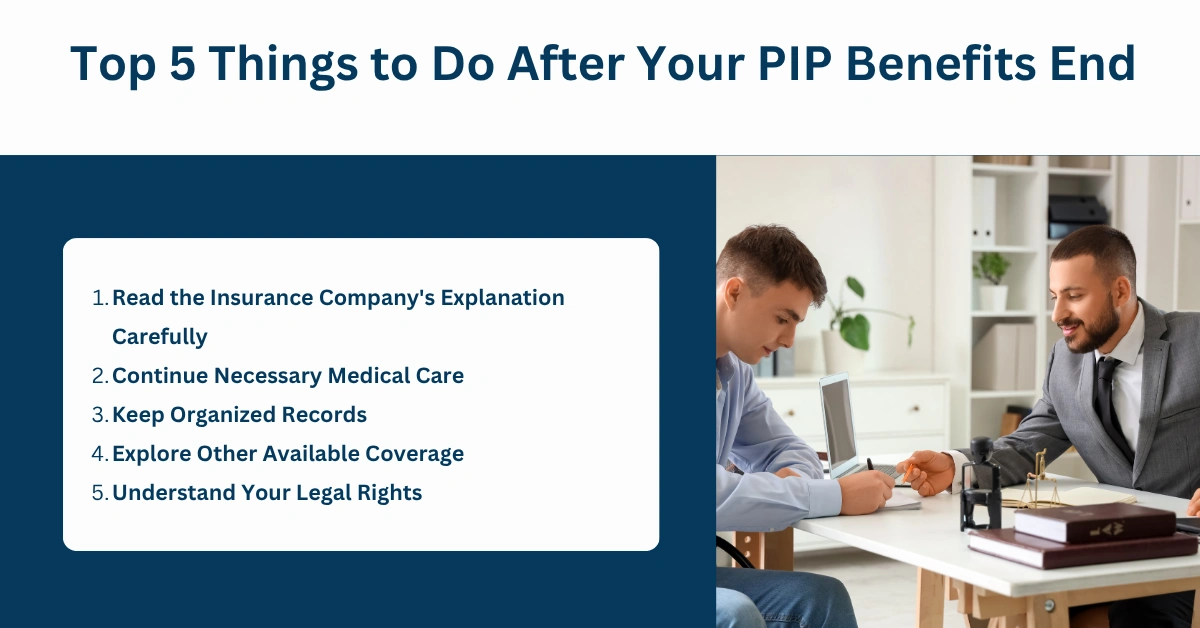
Top 5 Things to Do After Your PIP Benefits End
1. Read the Insurance Company’s Explanation Carefully
Understand exactly why benefits ended before making assumptions. The reason listed in the denial or termination letter often determines your next steps.
2. Continue Necessary Medical Care
Do not discontinue treatment simply because PIP payments have stopped. Follow your physician’s recommendations while exploring alternative payment options.
3. Keep Organized Records
Maintain copies of every medical bill, treatment record, insurance letter, and employment document throughout your recovery.
4. Explore Other Available Coverage
Additional insurance benefits may still exist depending on your health insurance, uninsured motorist coverage, underinsured motorist coverage, or other applicable policies.
5. Understand Your Legal Rights
If another driver’s negligence caused your injuries, speaking with an attorney can help you understand whether additional compensation may be available beyond your PIP benefits.
The personal injury attorneys at Ryan Hilts Law help injured Oregonians understand their legal options after serious accidents while pursuing compensation that extends beyond available insurance benefits.
Common Mistakes After PIP Benefits End
Even careful accident victims sometimes make decisions that unintentionally weaken their claims.
Some of the most common mistakes include:
- Assuming the insurance company’s decision is always final.
- Ignoring ongoing medical treatment because of financial concerns.
- Throwing away medical bills or insurance correspondence.
- Failing to document lost wages.
- Waiting too long to seek legal guidance.
- Accepting an insurance settlement before understanding the full extent of future medical needs.
Avoiding these mistakes helps preserve both your health and your legal rights as your recovery continues.
External Resources That Can Help
Several trusted organizations provide valuable information about insurance coverage, accident reporting, and consumer rights. While these resources cannot evaluate your specific claim, they can help you better understand Oregon’s insurance requirements and claims process.
The Oregon Division of Financial Regulation offers consumer information about insurance policies, claim handling, and insurance regulations.
The National Highway Traffic Safety Administration provides educational resources on motor vehicle safety, crash reporting, and injury prevention that may be useful after an accident.
Frequently Asked Questions
How long do PIP benefits last in Oregon?
The length of PIP benefits depends on the type of benefit being paid and the terms of your insurance policy. Medical benefits, wage-loss benefits, and other covered expenses each have separate limits and eligibility requirements. Benefits may also end when available policy limits have been exhausted.
Can I continue receiving medical treatment after my PIP benefits end?
Yes. Many accident victims continue receiving medically necessary treatment after PIP benefits have ended. Depending on your circumstances, payment may come from health insurance, a settlement, or another available source of coverage.
Does running out of PIP benefits end my injury claim?
No. PIP benefits are separate from a personal injury claim. If another party caused your accident, you may still pursue compensation for damages that extend beyond the benefits available through your PIP coverage.
Can an insurance company deny additional PIP benefits?
Insurance companies may deny or terminate benefits for several reasons, including exhausted policy limits, documentation issues, coverage disputes, or questions regarding medical necessity. Every denial should be reviewed carefully to understand the reason and determine whether additional action may be appropriate.
Should I speak with an attorney if my PIP benefits are cut off?
If your injuries are significant, your medical treatment is continuing, or another person’s negligence caused the accident, speaking with an attorney can help you understand your legal rights and identify additional sources of compensation that may still be available.

Conclusion
A PIP benefits cut off Oregon notice can create uncertainty during an already difficult recovery, but it does not necessarily mean your financial options have ended. PIP benefits are designed to provide temporary assistance, not complete compensation for every loss resulting from a serious accident.
Understanding why your benefits ended, continuing appropriate medical treatment, maintaining thorough documentation, and exploring every available insurance or legal option can make a meaningful difference in your recovery. When another person’s negligence caused your injuries, pursuing a personal injury claim may allow you to recover damages well beyond the limits of your PIP benefits.
Taking informed action early can help protect both your health and your financial future while allowing you to focus on what matters most: your recovery.
About the Author
Ryan Hilts is an Oregon personal injury attorney dedicated to helping accident victims understand their legal rights and pursue the compensation they deserve after serious injuries. Through Ryan Hilts Law, he represents clients throughout Oregon in cases involving car accidents, trucking accidents, motorcycle crashes, pedestrian injuries, wrongful death, and other personal injury matters. Learn more about Ryan’s experience and commitment to injured Oregonians on the firm’s About Ryan page.

