
Rear End Collision Lawyer: How to Protect Your Injury Claim After a Crash

A rear end collision lawyer is often who people look for when a “simple” crash turns into weeks of pain, missed work, and insurance headaches. Rear-end collisions are common, but the claim process is not always straightforward, especially when injuries are delayed or the insurer tries to minimize your recovery.
If you’re in Central Oregon and want help understanding next steps, working with a personal injury attorney in Bend, Oregon can make a major difference when medical bills and time off work start adding up.
Also Read
- Portland Hit and Run Lawyer: What to Do After the Driver Flees the Scene
- Top Car Accident Attorneys in Bend, Oregon
- 5 Signs It’s Time to Call a Rideshare Injury Lawyer vs. Handling It Yourself
- What Happens If the Other Driver Is Uninsured in Oregon? Here’s What You Must Do Immediately
- Common Mistakes People Make After Accidents And How to Avoid Them
TL;DR
Rear-end crashes are often presumed to be the rear driver’s fault, but insurers still fight claims by disputing injuries, causation, and treatment. Protect yourself by calling police, getting medical care quickly, documenting the scene and your symptoms, and avoiding recorded statements or early settlements. Oregon law also imposes strict time limits for injury lawsuits (often two years under ORS 12.110). When injuries are serious, fault is disputed, or you feel pressured by insurance, it is smart to speak with a rear end collision lawyer.
Key Takeaways
- Do not assume the insurance company will treat a rear-end crash as “open and shut.” Liability may be argued in multi-car crashes or sudden-stop situations.
- Medical documentation is the backbone of the claim. Delayed care is one of the easiest ways for insurers to dispute injuries.
- Evidence disappears quickly. Photos, witness info, and video requests should happen immediately.
- Be careful with statements and releases. Recorded statements and quick settlements often benefit the insurer, not you.
- Deadlines matter. Oregon’s statute of limitations for many injury claims is two years (ORS 12.110).
 1) Why rear-end claims get disputed even when fault seems obvious
Rear-end collisions often involve a driver following too closely or failing to stop in time. Oregon’s rule on following too closely is covered in ORS 811.485.
But insurers still look for ways to reduce payouts. Common disputes include:
Multi-car chain reactions
If three vehicles are involved, insurers may argue about who “started” the chain and how impacts contributed to injury.
Sudden stops
The rear driver is often presumed at fault, but the defense may argue the front driver stopped unreasonably or had non-working brake lights.
Injury and causation arguments
Even if fault is clear, insurers may claim your pain is “preexisting” or not caused by the crash, especially when treatment is delayed.
Liability may be simpler in rear-end crashes, but damages are where most claims are fought.
2) What to do at the scene to protect your injury claim
Your choices in the first 30 minutes matter.
Call 911 and request a police report
A report creates a neutral record. If police do not respond, document that you tried, then file the appropriate report if required.
Photograph everything
Capture:
- Both vehicles (wide and close-up)
- License plates
- Road conditions, traffic signs, skid marks
- Interior damage (headrest position, broken items)
- Visible injuries if appropriate
Get witness information
Even one independent witness can reduce “your word vs. theirs.”
Avoid discussing fault
Keep it factual. Do not apologize. Do not speculate about speed or braking.
Strong evidence prevents the other side from rewriting the story later.
3) Get medical care quickly, even if symptoms feel minor
Rear-end crashes often cause:
- Neck and back strain (including whiplash-type injuries)
- Concussions
- Shoulder and knee injuries from bracing
- Aggravation of prior conditions
Delayed symptoms are common. The problem is that insurers use delays to argue the injury was not serious or not related.
What helps your claim
- Same-day or next-day evaluation if you have symptoms
- Following through on treatment recommendations
- Consistent symptom reporting
- A simple journal of pain levels, sleep issues, headaches, and activity limits
If it is not documented, the insurer will treat it like it did not happen.
4) Oregon reporting requirements that people miss
Even when police respond, Oregon can require a separate DMV crash report in certain situations. The DMV’s Traffic Crash and Insurance Report guidance and forms are here.
If you are unsure whether your crash qualifies, it is safer to review DMV instructions or get legal guidance early. Missing reporting requirements can create avoidable problems.
A rear-end injury claim can be weakened by paperwork issues that have nothing to do with fault.
5) Rear end collision lawyer guidance on dealing with insurance
Insurance adjusters may seem friendly, but their job is to limit payouts. These are the biggest traps:
Recorded statements
You may have to cooperate with your own insurer, but you should be cautious about detailed recorded statements, especially when injuries are still developing.
Broad medical releases
Insurers often request authorizations that allow them to dig through years of medical history. That can lead to “preexisting condition” arguments even when you were fine before the crash.
Quick settlements
A fast check is tempting when bills are piling up. But settling too early can leave you paying for future care out of pocket.
If you are being pressured, a car accident attorney like Ryan Hilts can step in, handle insurer communication, and help evaluate whether an offer matches the real value of your case.
Most claim damage happens in conversations and paperwork, not in the crash itself.
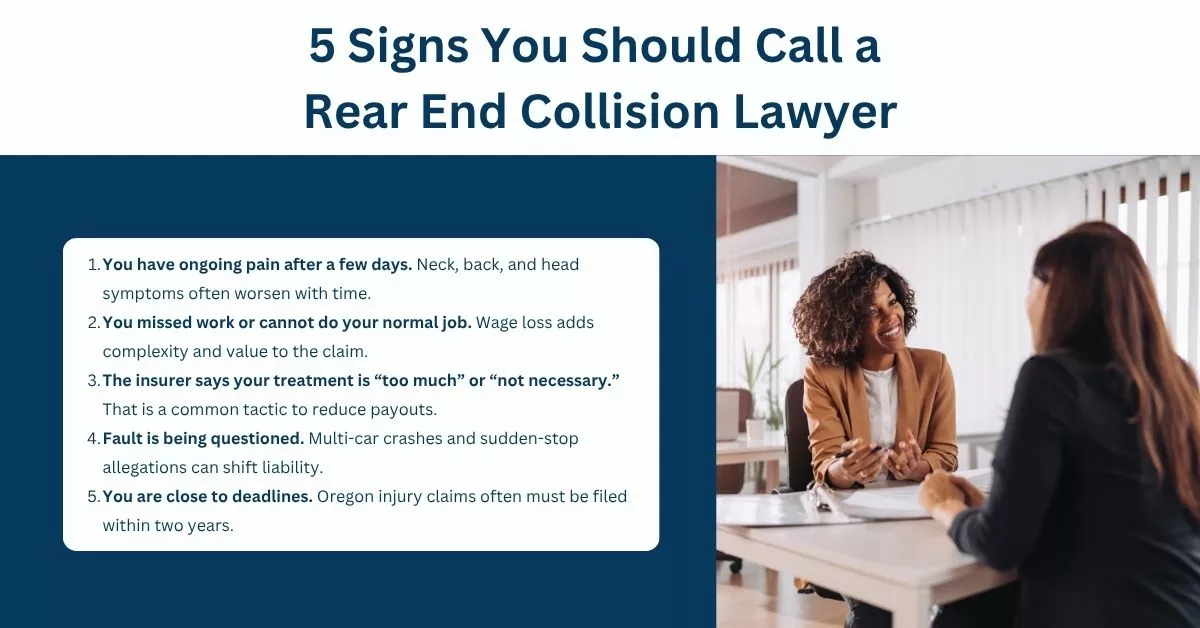 Here are five situations where people often benefit from legal help:
- You have ongoing pain after a few days. Neck, back, and head symptoms often worsen with time.
- You missed work or cannot do your normal job. Wage loss adds complexity and value to the claim.
- The insurer says your treatment is “too much” or “not necessary.” That is a common tactic to reduce payouts.
- Fault is being questioned. Multi-car crashes and sudden-stop allegations can shift liability.
- You are close to deadlines. Oregon injury claims often must be filed within two years.
If any of these apply, getting advice early can prevent mistakes that cannot be undone.
7) Deadlines and timing: don’t wait until the last minute
Even if you are hoping the insurer will “do the right thing,” you should protect your timeline. Oregon’s general limitations period for many injury claims is two years. Waiting creates two problems:
- Evidence disappears (video overwrites, witnesses move).
- You lose leverage if deadlines are approaching and the insurer knows you are under pressure.
Good cases can be weakened by delay. Strong cases can become great cases with early documentation.
 Conclusion
Rear-end collisions are common, but injury claims can turn into a fight over medical proof, causation, and value. If you protect the claim early by getting medical care, documenting the crash, and being careful with insurance communication, you put yourself in the best position for a fair outcome.
If you want help from a personal injury attorney in Bend, Oregon, you can also start a conversation with Ryan Hilts today.
FAQ
Who is usually at fault in a rear-end crash?
Often the rear driver, especially when following too closely. Oregon’s following-too-closely rule is in ORS 811.485. But fault can be disputed in chain-reaction crashes or unusual stop situations.
Should I see a doctor if I feel “okay” after a rear-end collision?
If you have any symptoms, yes. Delayed pain is common and early documentation protects your health and your claim.
Do I have to report the crash to Oregon DMV?
Sometimes, yes. The Oregon DMV provides the Traffic Accident and Insurance Report form and instructions.
How long do I have to file an injury lawsuit in Oregon?
Many injury claims are subject to a two-year statute of limitations under ORS 12.110.
When should I talk to a rear end collision lawyer?
If injuries are more than minor, the insurer disputes treatment or fault, or you feel pressured to settle quickly, a rear end collision lawyer can help protect your recovery and handle the claim process.
About the Author
Ryan Hilts represents injured Oregonians in car accident claims, including rear-end collision cases where medical bills and insurance pressure escalate quickly. Ryan is a member of the Oregon State Bar, the Washington State Bar, and the Oregon Trial Lawyers Association. He has been named a “Super Lawyer” by Super Lawyers Magazine for the past four years. Before he turned 40 he was named as a “Rising Star” for six years in a row. In his early years as attorney, Ryan was also listed as one of Oregon’s Outstanding Young Lawyers by Portland Monthly Magazine.

